













 Recently, my team members and I worked on a project with a well-known retailer facing challenges in the e-commerce area of its distribution center – and here was the question at hand: ‘Would replacing the WMS be the best solution?’
This retailer’s challenge was specifically its direct-to-consumer (DTC) picking inefficiency. E-commerce was a rapidly growing area for the retailer, and with a relatively large SKU count (more than 10,000), its WMS was challenged to support strategies for handling the typical small orders, including:
- Zone picking and consolidation (either with unit sorter or put walls)
- Batch picking (multiple orders on carts)
The problem was that the WMS could not support a combination of strategies and did not utilize AI-based intelligence in doing “system-directed” work. It would just print order tickets and permit a picker to create a batch unit of work by scanning a bunch of tickets together into a single unit of work.
The retailer is large and doing a lot of volume out of its DC, not to mention the rapid growth brought on by the recent pandemic. So, at scale, this one area of inefficiency, combined with recent labor challenges, was creeping into the entire operation, creating a situation that needed to be solved immediately.
We go back to the question of replacing the WMS. Many of the newer WMS solutions available on the market promote greater flexibility and adaptability than previous generations. But, replacing a WMS can be very disruptive and resource intensive so it’s worth carefully examining the net benefits expected. In the case of this retailer, all its major operational aspects – such as directed put away, replenishment, and inventory management – were running just fine. The net gain from a new WMS would be minimal.
After weighing the costs of time and money, the retailer decided to keep its current WMS but look for add-on solutions to fill gaps in processes. With this decision, the retailer significantly improved throughput in their e-commerce area while saving significant time and costs.
Getting to the WMS decision: Should it stay or should it go?
When replacing a WMS makes sense:
- Your WMS is an older platform which requires specialized technical expertise to keep it running.
- You need features in your current WMS that you just can’t find as add-ons, such as:
- Directed putaway
- Supply chain planning tools
- Improved inventory management capabilities
- Solutions for increased expectations in security and service levels
- Your WMS is no longer supported by the original company. This could be due to companies consolidating and sunsetting the software or other factors. Chances are, if you purchased your WMS more than 10 years ago, your software may not be supported any longer.
- Your WMS requires a sizable investment of time educating new employees on its use. That’s a sign it’s probably not as intuitive as it could be. It might be outdated in a way that requires replacement.
When replacing your WMS may NOT make sense:
- The price tag. A new WMS will most likely cost more than you think. Customization leads to adding after-market pieces and added licensing costs and modifications. The payback may be much further out than what you had initially expected. I’ve seen an instance of a projected three-year payback becoming a five-year payback. This was the result of adding modifications to support existing specialized processes and support systems (conveyors, sorters, etc.) – all of which required new design, coding, and QA testing.
- Disruption and resources needed. Replacement relies on a new integration from ERP to host. That might take six months to design. And you’ll need to include IT and Operations team members throughout the planning process. Once it’s implemented, you have all the training to consider. For example, processes will be different from picking to receiving to reporting. You’ll want to factor in that time to educate your workforce.
For these reasons and more, careful ROI assessment must be made to ensure WMS replacement is worth your time, money and the change management effort. Trust me when I say that I’ve seen the results of a client’s poor assessment on this!
A smart solution: The case for AI-based WMS optimization solutions
For the retailer I discussed earlier, AI-based optimization solutions offered the right fit because it helped them optimize e-commerce picking operations by adding software focused for just that area. This focus is a key benefit of add-on optimization solutions. A traditional WMS system might not give you this granularity because its job is to deliver broadly.
Another thing to consider is this: Some parts of your WMS – say inventory or location management – might be working well already. So the question becomes ‘how can you augment these solid areas with outside tools to match your operation today?’
Optimization solutions provide a modular approach for addressing specific areas of your operation where additional efficiencies are needed without having to completely replace the rest of your infrastructure and systems. Today’s optimization suites are driven by AI, permitting you to:
- Reduce travel time through dynamic assessment of tasks and immediate building of the most efficient unit of work (where appropriate), and task interleaving
- Balance potential task density (more work per linear foot travelled) with order priority to assure highest customer service levels
- Provide real-time controls and dashboards to monitor workflow and individual performance, and to enable instant process adjustment to handle exceptions and changes
- Provide labor orchestration to guide labor where needed in real time on the warehouse floor – whether to change tasks or to collaborate with AMRs.
While it might make sense to replace your WMS, there are plenty of reasons to continue using your WMS while adding optimization software. This practical solution can save you a substantial amount of time and money while also ensuring that your operations keep humming along without disruption.
 Dan Keller, Senior Consultant at Lucas Systems, has been designing and delivering innovative software solutions for warehouses and distribution centers for 30+ years. As an early evangelist for voice technology, he has participated in dozens of industry-first implementations of voice and other technologies in industries spanning food and beverage, retail, healthcare, industrial supply, and manufacturing. He has held roles in sales, marketing, solutions design and delivery during his 20+ years at Lucas Systems and is a frequent speaker at supply chain and logistics conferences, including the Warehousing Education and Research Council, the Wine and Spirits Wholesaler’s Association, the Foodservice Distribution Conference, the Healthcare Distributors Management Association and more.
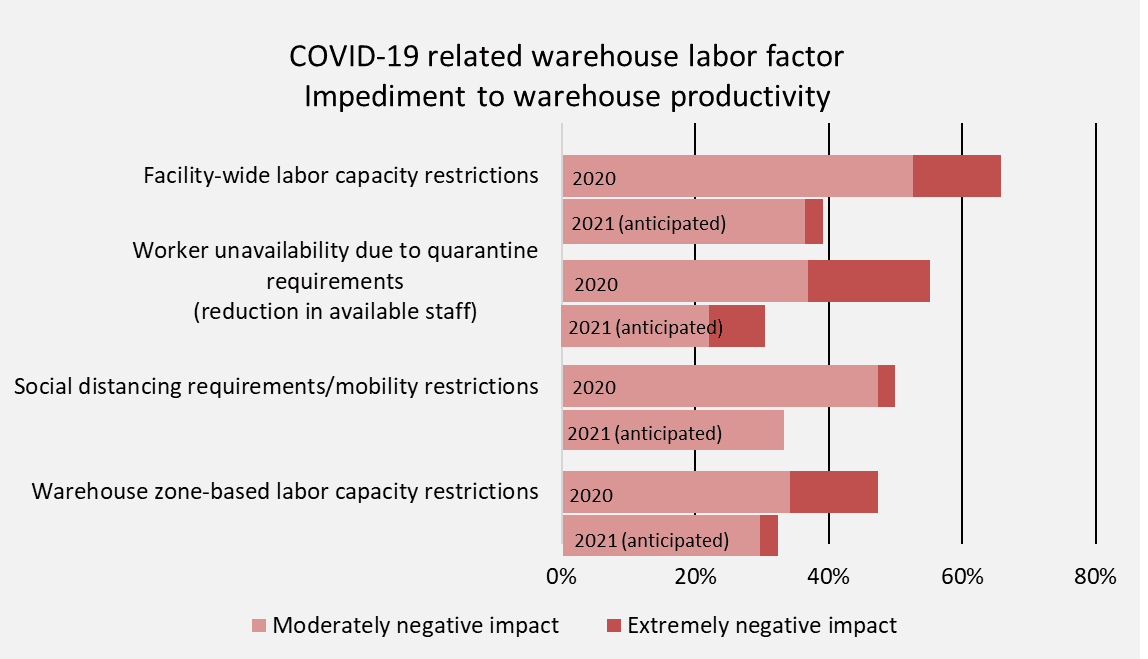
 It’s been 18 months since the World Health Organization (WHO) declared COVID-19 a pandemic, and the world is still trying to adjust to the changes and uncertainties associated with it, even causing a domino effect in some instances. The pandemic halted many supply chains last year, closing factories and stores, and limiting manufacturing and distribution operations. Many workers decided to retire, re-locate, or consider new professions. Construction of manufacturing plants and new warehouse sites were also postponed or canceled entirely due to market uncertainty.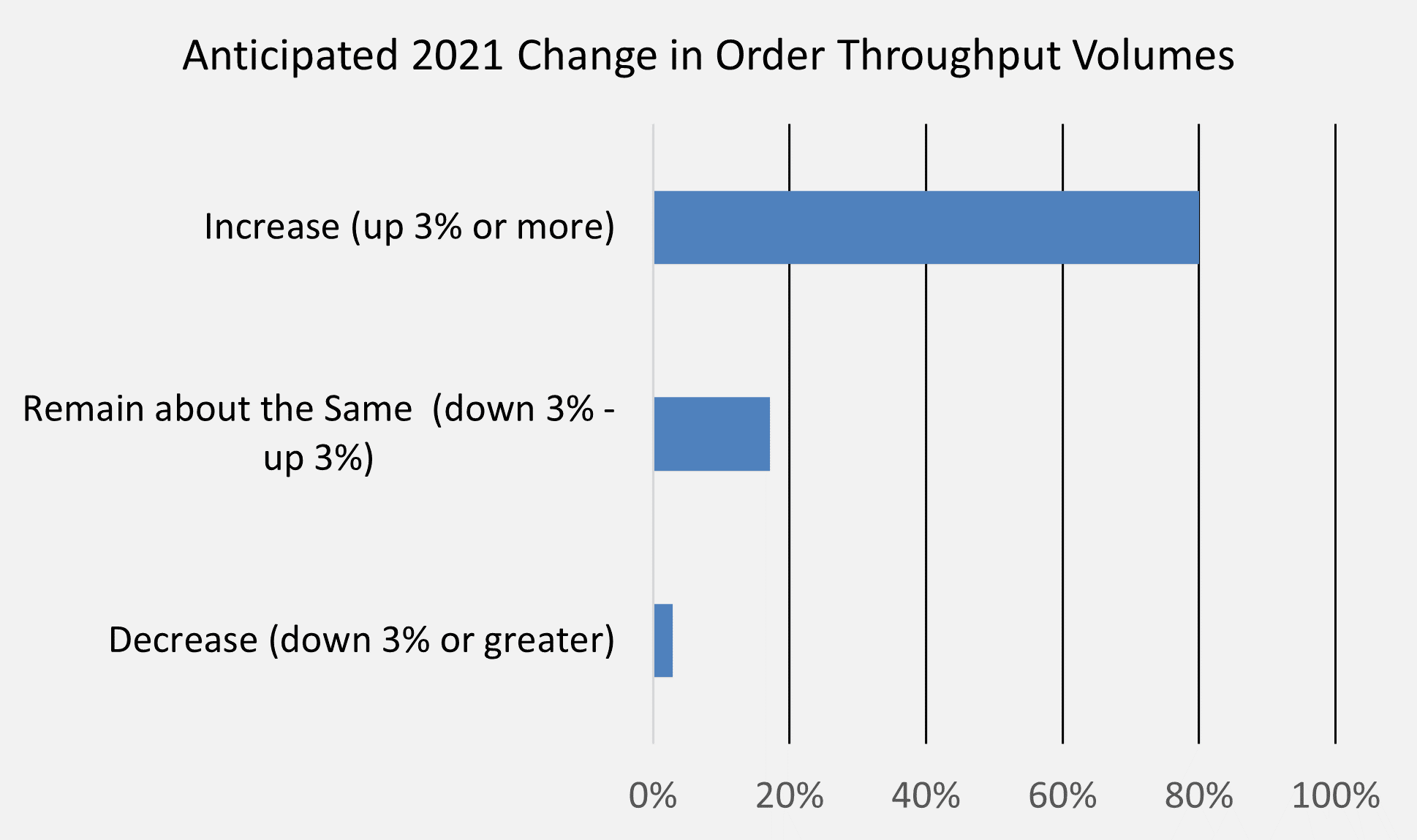
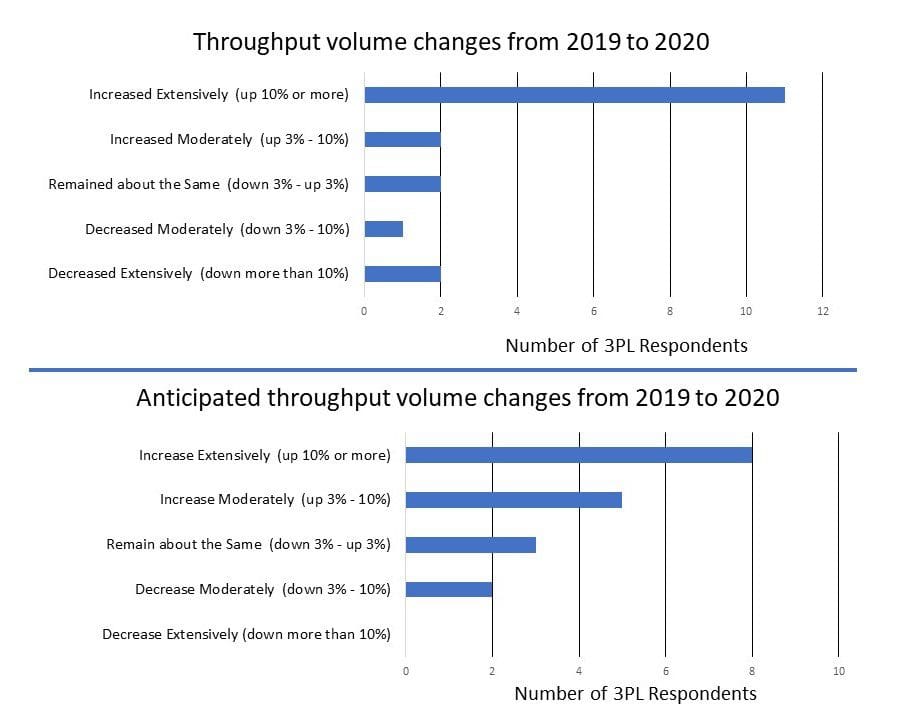
 As an entrepreneur I’ve been reflecting on this a lot: The current milestone in logistics and fulfillment is using emerging technologies to capture and leverage exponentially growing data sets in warehouses and throughout the entire fulfillment network. Data sets have grown quickly in the cloud paradigm – and they exploded in 2020. Perhaps nobody realized how quickly or how extensive that growth would be, but all of that data has value. How are we as supply chain leaders and businesses tapping into that data and using it to make our supply chains more efficient?
 ARC Advisory Group and
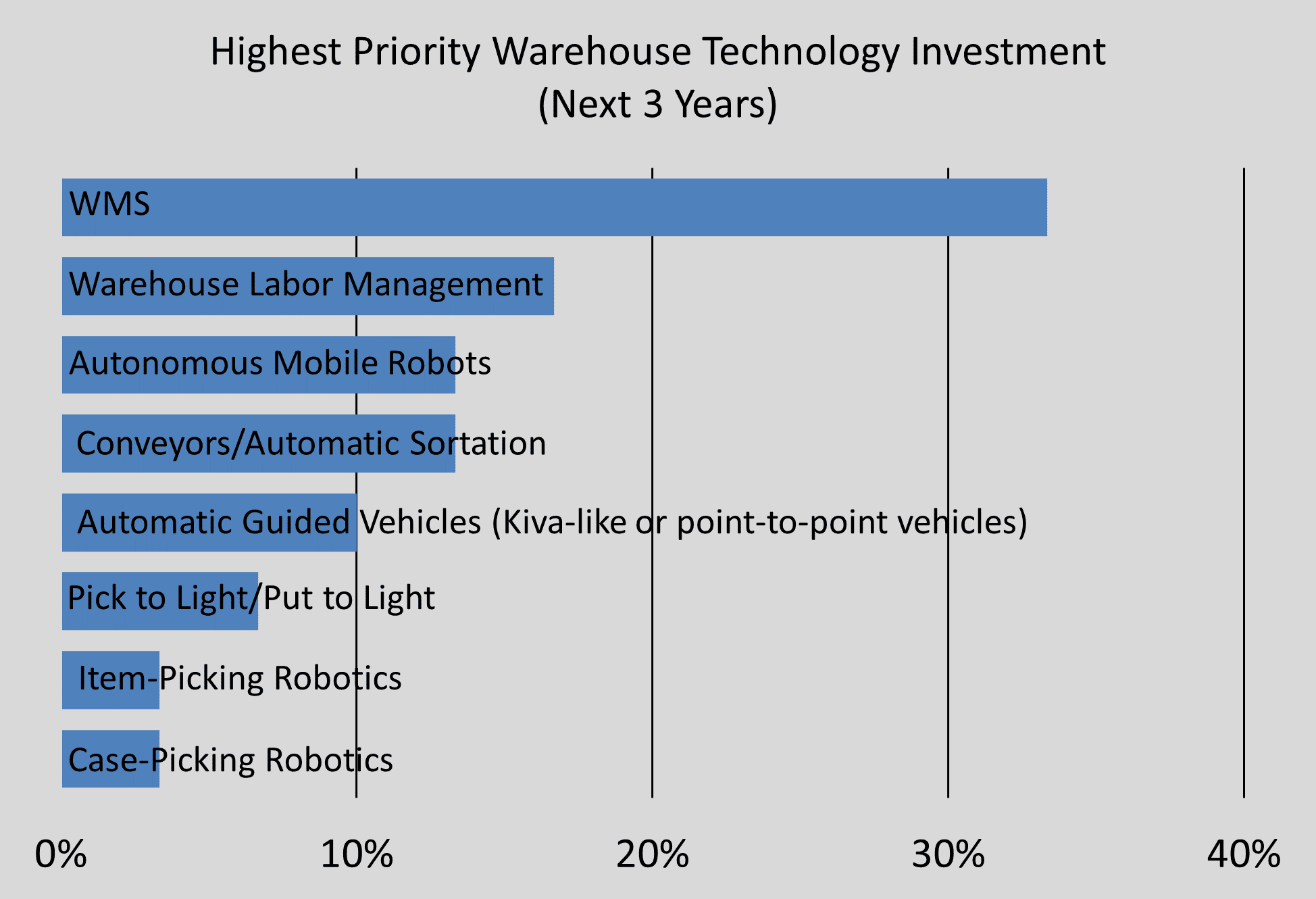
  Distribution is no longer a backwater of the economy, due in large part to the upheavals brought on by ecommerce. Today’s DCs and fulfillment centers are a major driver of employment growth and a highly visible proving ground for autonomous robots and other next-generation technologies. But there is a technology gap between gleaming new automated facilities and tens of thousands of existing warehouses and distribution centers that pre-date the warehouse building boom of the past 5-10 years. For companies across industries, transforming existing DCs and narrowing this technology gap is key to competitive advantage in a changing economy. Many companies are achieving this transformation by adopting modular, elastic DC technologies – including AI and robotics – that provide continuous warehouse optimization without replacing their current monolithic and static
  Justin Ritter, Vice President of Operations and Customer Success, Lucas Systems. Justin leads the solution design, project engineering, delivery and support teams at Lucas Systems. He has overall responsibility for the successful implementation of Lucas warehouse optimization solutions at warehouses and distribution centers worldwide. Earlier in his career he managed large-scale supply chain projects for manufacturing and distribution organizations in food and beverage, retail, consumer goods, and automotive industries. Justin is a certified Lean Six Sigma Black Belt, and he holds an MBA from the Katz Graduate School of Business at the University of Pittsburgh.
 Dan Keller, Senior Consultant, Lucas Systems. Dan has more than 30 years of experience designing and delivering innovative software solutions for warehouses and distribution centers. He was a leading evangelist for voice technology in the late 1990s, and he has been involved in dozens of industry-first implementations of voice and other technologies in industries spanning food and beverage, retail, healthcare, industrial supply, and manufacturing. During his 20-plus years at Lucas he has held roles in sales, marketing, solutions design and delivery. He is also a frequent speaker at supply chain and logistics conferences, including the Warehousing Education and Research Council, the Wine and Spirits Wholesaler’s Association, the Foodservice Distribution Conference, the Healthcare Distributors Management Association, and others.