













Supply Chain and Logistics News Weekly Round Up June 22nd-26th 2026

 The global supply chain landscape is currently defined by rapid transformation and persistent volatility. This week’s developments underscore a shift toward greater operational resilience and adaptation, ranging from the immediate impact of the CBP’s suspension of the de minimis exemption to the mounting pressure of early peak season rate spikes. As shippers navigate these headwinds, we are also seeing structural long-term pivots, including significant federal investments in domestic nuclear manufacturing and a fundamental rethink of Transportation Management Systems—moving away from traditional software toward integrated, outcome-driven operating models. This week’s round-up explores how these forces are reshaping procurement, execution, and strategy for logistics professionals.
The End of De Minimis: CBP Suspends Low-Value Duty-Free Imports
In a monumental shift for cross-border e-commerce, U.S. Customs and Border Protection (CBP) has implem ented an interim final rule that indefinitely suspends the de minimis administrative exemption, which previously allowed shipments valued at $800 or less to enter the country duty-free with minimal clearance. As detailed in the Federal Register Interim Final Rule, all commercial imports arriving via ocean, air, and trucking lanes must now undergo formal or informal customs entry procedures, exposing them to standard tariffs and rigorous compliance checks. The sudden change, also highlighted in the official U.S. Customs and Border Protection Press Release, temporarily spares only the international postal network under a strict, flat-rate tariff structure. For direct-to-consumer (DTC) brands that have built entire supply chains around direct-from-factory shipping, this regulation effectively erases their primary cost advantage overnight. Logistics planners must now scramble to transition from fragmented individual parcel shipping to bulk ocean freight, bonded warehousing, and localized domestic distribution strategies to absorb the sudden surge in operational costs and clearance times.
Ocean Freight Spot Rates Surge as Early Peak Season Collides with Port Congestion
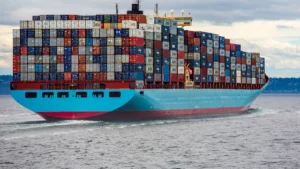 Global container freight markets are experiencing severe pricing pressure as an exceptionally early peak season collides with systemic network constraints. According to the latest Locada Intelligence Report, spot rates from Asia to the U.S. West Coast have jumped by over 23% to cross $6,800 per FEU, while East Coast routes have surged past the $8,100 threshold. This dramatic spike is being driven by sustained shipping diversions away from the Red Sea, acute port congestion, and a preemptive rush by retailers to front-load holiday inventory. With major carriers signaling further general rate increases that could push spot rates toward $10,000 per FEU on key lanes, shippers are urged to diversify their transport modes, secure capacity early, and prepare for a highly volatile and expensive third quarter.
Shoring Up the Grid: DOE Injects $17.5 Billion to Rebuild the Domestic Nuclear Supply Chain
 To safeguard the nation’s energy independence and accelerate clean grid transitions, the U.S. Department of Energy (DOE) has announced a massive $17.5 billion loan initiative aimed at financing the manufacturing of nuclear reactor components. As reported by Mining.com Coverage, the funding targets critical vulnerabilities in the specialized, highly concentrated upstream supply chain, which has historically plagued large-scale energy projects with severe delays. By providing low-cost capital to domestic fabricators of heavy forgings, coolant pumps, and control systems, the initiative seeks to establish a resilient, highly localized manufacturing base. For supply chain managers within the industrial and utility sectors, this federal backing—signified by Westinghouse’s secured allocations outlined in the Cravath Legal Announcement—signals a major push to de-risk high-consequence procurement, shifting reliance away from bottlenecked foreign suppliers.
Beyond Software: Why the Future of TMS is an Operating Model
 The traditional software model for Transportation Management Systems (TMS), in which shippers purchase a system of record solely to execute tenders, routing guides, and audits internally, is rapidly shifting. Shippers are increasingly looking beyond basic software features to invest in entire transportation operating models. This evolution reflects a growing operational reality: deploying complex software does not automatically generate logistics excellence, particularly when an organization lacks internal process maturity, a robust carrier strategy, or real-time exception-management capacity. To bridge this execution gap, industry categories are blurring as TMS software, managed transportation services, and digital freight brokerages converge. Modern buyers are shifting focus away from legacy functional checklists and toward integrated solutions that bundle technology with embedded capacity, workflow automation, and concrete outcome ownership.
Autonomous Tendering Is Coming for the Routing Guide
 The traditional, static routing guide, long the central control mechanism for freight execution, is struggling to keep pace with highly volatile transportation markets. In response, modern logistics operations are transitioning toward autonomous tendering, redefining the routing guide from a fixed ladder of preferred carriers into a dynamic, policy-driven decision framework. Instead of manually cycling through a sequence of static, pre-negotiated carrier rankings that may be outdated or misaligned with current lane conditions, next-generation systems continuously evaluate live variables. By analyzing real-time capacity, historical acceptance rates, spot market alternatives, service risk, and facility constraints, these platforms can determine which carrier is most likely to deliver the optimal outcome under current conditions. This evolution does not eliminate contract rates or human oversight; rather, it establishes automated guardrails that operationalize procurement expertise at scale, ensuring logistics decisions are optimized for real-world execution rather than historical assumptions.
AI Is Reshaping Supply Chain Execution. Here’s What Comes Next.
Two ARC Advisory Group white papers on the next stage of AI in supply chain operations.
AI is moving beyond isolated copilots and technical architecture into coordinated operational decision systems. This ARC Advisory Group white paper explains how supply chain AI is shifting from capability to execution, where context, governance, workflows, thresholds, and action pathways determine whether AI improves real decisions across planning, logistics, sourcing, fulfillment, and risk management.
Download Our Featured White Paper:
AI in the Supply Chain Part II: From Architecture to Execution - Defining the Decision Intelligence Layer in Modern Supply Chain
Download Our Foundational White Paper:
AI in the Supply Chain: Architecting the Future of Logistics with A2A, MCP, and Graph-Enhanced Reasoning
Explore Our Domains
Planning, Execution & Visibility | Transportation & Logistics Operations | Warehousing, Fulfillment & Automation | Global Trade & Compliance | AI & Advanced Analytics | Data, Integration & Interoperability | Supply Chain Platforms | Risk & Resilience | Sustainability & ESG
Independent ARC research for supply chain leaders and technology decision-makers.