












 On Monday, my home state of Massachusetts announced the official details regarding the state’s four-phase plan to re-open the economy during the coronavirus pandemic. Phase 1 comes in a two-wave approach, with some business opening immediately and others opening on May 25. One group that found the approach disappointing is retailers. Many Massachusetts retailers see this plan as potentially too little too late. According to the new guidelines, nonessential retail stores will be allowed to open for curbside pickup, as well as remote fulfillment, on May 25. However, opening stores to the general public for browsing will be part of phase 2, which does not have a firm date as of now. With this announcement, e-commerce will continue to be vital for retailers looking to remain open. This will put added strain on Amazon, FedEx, and UPS to keep up with customer demands. But, the last two months, combined with the coming months will help each of these companies to succeed in the post COVID world.
E-Commerce and the Post COVID World
E-commerce is certainly booming right now as many brick and mortar retail locations remain shuttered. Nonessential retailers are beginning to open up across the country, but e-commerce is still seeing a surge. Amazon and Walmart have collectively hired nearly 500,000 employees to meet the growing needs of e-commerce fulfillment, notably in the warehouse and on the road. However, with the increase in e-commerce sales comes concerns over capacity constraints. In turn, many customers have seen long delays in order fulfillment.
These delays can also be attributed to supply chain networks being overwhelmed. The demand is outpacing the supply right now for capacity and picking volumes. Plus, for many retailers, there were planned delays for those items that were considered nonessential. However, now that the country has had a few months to adjust to the new normal, nonessential items are making their way back to the forefront of ordering queues. And companies are preparing for the reality of the post COVID world.
Amazon and the Post COVID World
Amazon saw an uptick in business from the beginning of the coronavirus pandemic. One of the biggest surges for Amazon was in online grocery orders. The demand became so extreme that the company was forced to stop accepting new Whole Foods delivery customers as it simply did not have the capacity to meet the demand.
 Over the years Amazon has been building out its private logistics network, with a keen eye on moving past a reliance on FedEx and UPS for home deliveries. The coronavirus pandemic has seen the company’s private fleet grow. In fact, it seems that until recently, most of my Amazon orders were delivered by either FedEx or UPS. Now however, every order I get is delivered by an Amazon branded delivery truck, and I see them rolling through my neighborhood all day every day. By comparison, FedEx and UPS trucks have been seen less frequently, at least in my neighborhood that is. One of the concerns with ordering packages has been the social distancing aspect. And for delivery drivers, this is certainly a concern. Rather than collecting a signature or even knocking on my door to give me my package, Amazon drivers have been taking a picture of the item on my doorstep, which is then emailed to me as proof of delivery. For Amazon, and the rest of home deliveries, this seems like it will be a staple of the post COVID world.
One area of concern for Amazon was the long delivery timeframes customers were experiencing for nonessential items. This stemmed from the demand surge at the beginning of the coronavirus outbreak. However, the company has seen the light at the end of the tunnel in terms of delivery timeframes. Amazon has said that customers can expect the usual one and two-day delivery timeframes to return imminently and service levels will get back to normal. This is good news for both consumers and the company, as more and more consumers were beginning to look elsewhere for items they would normally order from Amazon. The company lifted restrictions on the amount of inventory that suppliers can send to its warehouses indicating that it is back to business as usual.
As part of its long-term post COVID world plans, Amazon showed a glimpse of a virus killing robot it is developing that would roll through grocery stores and distribution centers, using banks of ultraviolet light to kill viruses on surfaces. While the company has indicated that this is something they are working on for the future, it is safe to say that the product would be a welcome one for most retailers and manufacturers. And while the technology already exists, it is not surprising that Amazon is working on its own model.
FedEx and the Post COVID World
 FedEx is also making plans to succeed in the post COVID world. One way to ensure delivery timeframes is to make sure that the logistics network is not overwhelmed. And sometimes to do this, companies need to pump the brakes. That is exactly what FedEx did recently to make sure it could deliver on customer expectations. As e-commerce demand surged, the company limited the number of items that retailers could ship from certain locations such as stores. These limits were only a temporary order, but they were specifically designed to make sure that the network did not get overwhelmed. It is this type of transparency that can go a long way.
The biggest news for FedEx for the post COVID world is its announcement of a new partnership with Microsoft. Just a few months ago FedEx canceled its partnership with Amazon, Microsoft’s biggest competitor when it comes to cloud services. Now, FedEx is teaming up with Microsoft on a multi-year partnership that combines FedEx’s logistics network with Microsoft’s cloud. The first service, FedEx Surround, will give real-time analytics into the supply chain and delivery. The offering will be available later this year and will collect data through FedEx’s IoT platform. This data will be analyzed using Microsoft’s technology services to help predict potential delivery disruptions due to weather, congestion, or other issues. This enables companies to re-route items and alert customers of potential delays.
FedEx is also hiring drivers to keep with the growing demand of e-commerce. According to FedEx CEO Frederick W. Smith, the company has been hiring about 4,000 drivers per week for its FedEx Ground unit. Assuming that e-commerce does not see a significant drop as brick and mortar retailers re-open, this is a step towards making sure that delivery timeframes can be met in a post COVID world. The bigger question is whether FedEx will have the warehouse capacity to keep up.
UPS and the POST COVID World
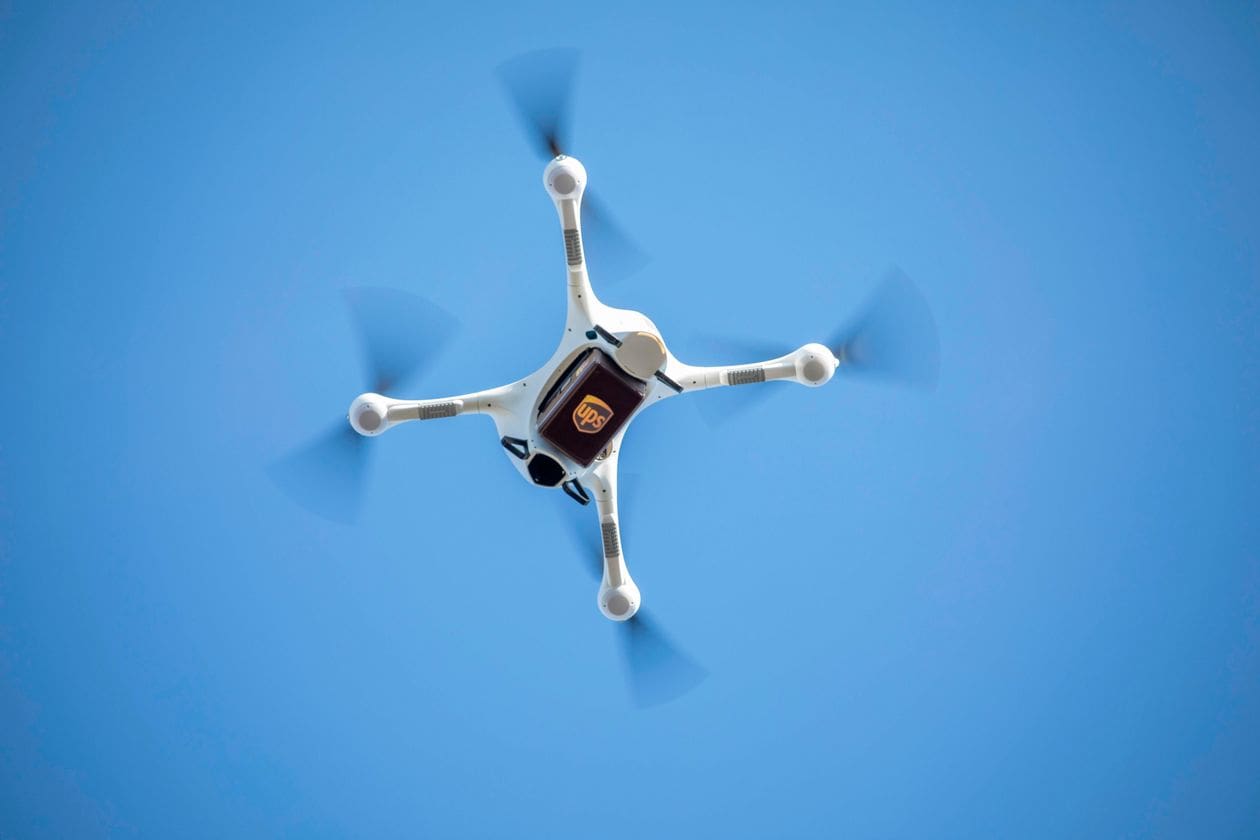 UPS has taken some steps recently that will align well with the post COVID world as well. As the interest and use cases grow for drone deliveries, UPS set up a program to deliver essential items during the pandemic. UPS will use drones to fill prescriptions for residents of The Villages in Florida, one of the country’s biggest retirement communities. The deliveries will come from a CVS store about a half mile away and will mark the first paid residential deliveries by UPS’s drone unit Flight Forward. The drones will drop the prescriptions to a central location, where a Flight Forward employee will ferry them by golf cart to homes. This program could be a model for future drone deliveries of essential items to at risk communities.
During the current pandemic, UPS has also expanded the use of its UPS My Choice program. UPS My Choice allows business and residential users to manage their delivery schedules by rerouting or rescheduling deliveries, get estimated and confirmed delivery windows, tracking and managing multiple packages at once, receiving real-time alerts, following deliveries on a map, leaving instructions for the driver, and routing packages to a UPS Access Point instead of home delivery. This program helps the consumer to get the package when and how they want in the most socially responsible manner possible.
On top of the My Choice program, UPS has also made changes to its signature requirements, which could certainly be the method of the future as well. The company has eased guidelines on the types of packages that need a signature. However, for those deliveries that do still require a signature, UPS is taking a novel approach. Drivers will leave a sticky note on the door before moving back a safe distance. Once the customer has signed the form, the driver will wait for the customer to leave and then retrieve the form. This could certainly be how signatures are handled in the new post COVID world.
Final Thought
The post COVID world will likely look a lot different than what we experienced just a few short months ago. As economies begin to open, restrictions abound and are likely to remain in place until a vaccine is created and administered across the country. In this post COVID world, the supply chain will continue to be a key cog in ensuring that the economy can function, and home deliveries will be the new normal for more and more of our retail needs. To that end, Amazon, FedEx, and UPS have put changes in place to deal with the changing nature of customer demands and interactions. These changes, which include drones, virus killing robots, private fleets, logistics partnerships, and more choices for customers have put each of these companies in a position to continue to thrive in the post COVID world. We will have to wait and see just what that world looks like though.

 Tomorrow is Halloween. Pumpkins have been carved, pumpkin seeds have been roasted, candy has been bought (and opened, eaten, and more has been bought), and costumes have been purchased or made. And tomorrow, children across the land will go door to door asking for candy, while dressed in these scary, funny, cute, or ridiculous costumes. It’s certainly one of my favorite holidays of the year. But there is so much planning that goes into the holiday, especially when you look at the supply chain implications of pop-up Halloween stores. They run for a month and a half at most, and disappear on November 1. So many costumes and accessories to ship around the country, with anything leftover to be put in storage or sold at discount prices. It’s actually mind boggling to think of all the effort and planning that goes into a theme store like this. That’s why I prefer to sit back and just enjoy the day.
 Wal-Mart is jumping on the drone craze, becoming the latest retailer to ask permission to use drones for customer deliveries. The retailer applied to the Federal Aviation Administration (FAA) for an exemption from current regulations to make deliveries to customers in its parking lots and at customers’ homes. Wal-Mart is also hoping to use drones to check on buildings, warehouses, and DC’s. This aspect of the request makes sense as surveillance equipment cannot see these buildings from all angles, which is something a drone could fix.
 UPS announced rate increases will take effect January 2, including the second boost this year to its fuel surcharge and a near-doubling—to $110 from $57.50—of the fee to deliver oversize items, such as mattresses and patio furniture. The company’s new round of rate increases includes a fee to help make up for cybershopping sites and big-box retailers’ sharing of generous shipping discounts with vendors. This will be done through a move that charges for third-party billing. This new fee also will affect retailers that allow vendors to use the discounts to ship directly to consumers—skipping the middleman—or direct goods to their own shelves for restocking.
 Best Buy has announced that it will offer free shipping on online orders from November 1 through January 2. This means the company is waiving the $35 minimum threshold to receive free shipping. For many consumers, this sounds like great news. However, how many orders will this truly affect? The home electronics retailer sells a wide array of goods, but the majority of those items, especially big ticket items, would already qualify for free shipping. The company is betting on the fact that a perceived discount will bring in customers.
 The carrier handling Amazon’s same-day delivery services has been hit with a lawsuit by California truckers who claim the company has misclassified them as contractors. By not classifying them as employees, the suit claims they are thereby denying them wages and benefits. Four truck operators filed the class action litigation earlier this month on behalf of themselves and hundreds of other delivery drivers employed as part of Amazon’s Prime Now service. With Prime Now set to expand and put the pressure on competing retailers to meet same day delivery expectations, this lawsuit could potentially derail plans.
 Doorman is coming to Chicago. The startup is aiming to eliminate the problem of consumers missing deliveries. Basically, the company allows consumers to schedule their own deliveries, as late as midnight. Instead of taking delivery whenever the shipper arrives, Doorman users provide an online retailer with their personal “Doorman address” (a location in the Doorman warehouse). The company then signs for you and holds the package until you’re ready to receive it. Users are alerted through a notification in the Doorman app, and can schedule their delivery from 6 PM to midnight, 7 days a week. The company is now live in Chicago and will be live in New York soon. It is certainly an interesting business plan for congested cities, allowing consumers to schedule a pick-up time instead of having packages left on their doorsteps.
 As I wrote about in last
  Cubs win! Cub win! And for the first time in the 100 years the Cubs have been playing at Wrigley Field, they clinched a post-season series at home. As Jason Stark pointed out, this was the 7,907th game played at Wrigley – and they finally clinched a series at home. This series also marked the first time since 2003 that the Cubs have won a post-season series at all. As a life-long Red Sox fan, I understand the pain of Cubs fans, and the elation they are feeling now. I remember the 2003 post-season clearly, when it looked as though the Sox and Cubs were destined to meet in the World Series, guaranteeing that one curse or the other would end. The only thing that ended was the hopes and dreams of the Sox and Cubs fans when both lost the Championship Series in devastating fashion in 7 games. The Sox got their revenge the next year with a post-season run for the ages. And even now, after 3 last place finishes in 4 years (of course that 4th year was another World Series win), I can’t really complain too much about the Sox. But I think most of us in Boston are jumping on the Cubs bandwagon, and hoping they bring the World Series trophy to Chicago.
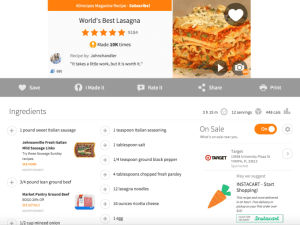 Instacart and Allrecipes have partnered to allow home cooks to add a meal’s ingredients to their grocery list with a click of a button. This move pushes Instacart into unchartered waters – ingredient delivery service. Players like Blue Apron and Hello Fresh have become more popular as customers have a box of ingredients with recipes delivered to their door. While these services are a bit on the expensive side, the Instacart – Allrecipes partnership will appeal to more price-conscious shoppers. And given Allrecipe’s reach – 1.3 billion visit a year – this is a huge growth opportunity for Instacart.
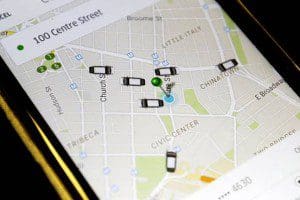 Uber is expanding its UberRush service to Chicago and San Francisco. The service, which has been tested in New York for the last year, is a smartphone enabled courier service. Instead of hailing a ride around town, customers can order a pizza to be delivered. UberRush allows merchants to plug a customer’s order into an online order form. At that point, a courier (on foot, bike, or car) will pick up the order and deliver it to the customer. Uber collects a $5 to $7 delivery fee, which is either passed on to the customer or paid by the merchant. In its expansion, Uber is building what chief executive Travis Kalanick has called an “urban logistics network.” The network includes Uber, UberRush, and UberEats, which was launched last fall to lunch and dinner items from popular restaurants to Uber users in parts of New York City, Chicago, Los Angeles, Toronto, and Barcelona.
 UPS announced that it is expanding its UPS Worldwide Express Service by adding 41,000 additional global postal codes. This service provides customers with guaranteed delivery on the next possible business day by 10:30 a.m., 12 noon, or 2 p.m., based on destination. The company says this will result in earlier guaranteed-delivery options for shippers that only previously had end-of-day guarantees. The service will now be available in 65 countries that make up 91 percent of global GDP, with the bulk of the new codes in the Asia Pacific region. It is the single largest one-time expansion of the service ever.
 Chinese search engine giant Baidu is entering the e-commerce fresh produce sector. The company is investing $20 million (10% of the latest $200 million in funding) into Womai, a food website owned by China National Cereals, Oils and Foodstuffs Corp (COFCO), a leading supplier of agricultural products. The investment comes as a growing number of Chinese consumers are turning to the Web for fresh produce. The funds will be used to increase the cold-chain logistics infrastructure and for third-party delivery systems.